How Consistent Multiplex Interfaces Help Dealers Close the Loop at Delivery
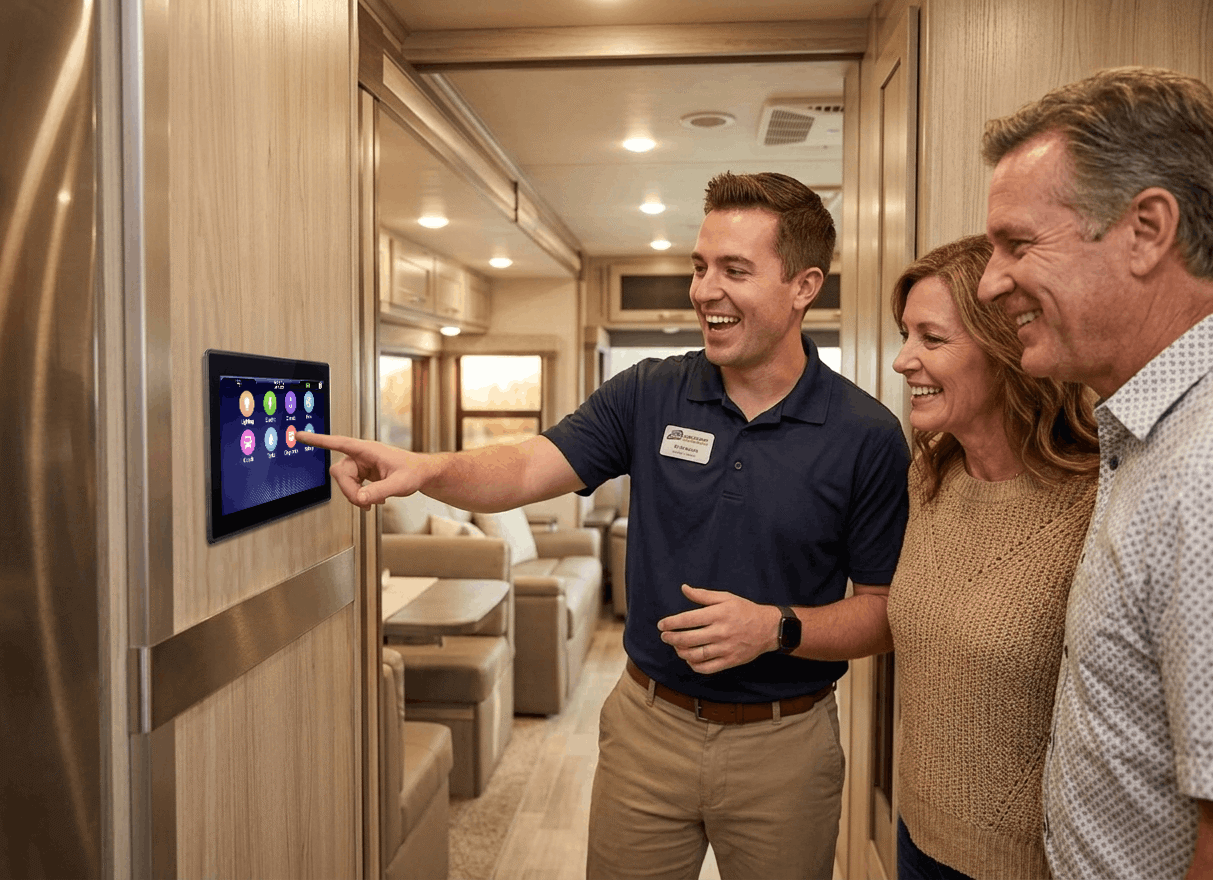
The Walkthrough is Where the Sale Gets Tested
The customer already signed. Now a sales rep or technician has 30 to 45 minutes to explain lighting, HVAC, power management, slides, awnings, and monitoring across a coach that may have three separate screens, two apps, and a control panel none of the staff touched last week.
If that goes badly, it costs everyone. The customer calls back with questions that aren't really questions. They're signs the customer didn't retain what they were shown. The service team fields non-warranty visits. The sales staff loses confidence presenting a system they can't fully explain. None of that is a technology problem. It's a consistency problem.
What Inconsistency Actually Costs a Dealership
When the interface experience varies between models, trims, or subsystems, walkthroughs tend to break in one of two predictable directions: staff over-explain to compensate, or they gloss over the details to stay on schedule. Both outcomes leave the customer uncertain.
For dealership sales teams, this shows up directly in the numbers: lower close rates on feature-heavy units, more time spent retraining staff when model years change, and post-sale satisfaction scores that don't reflect what the product is actually capable of.
For OEM product and engineering teams, inconsistency in dealer training is one of the harder problems to manage at scale. A dealer network that can't reliably explain what a system does puts pressure on warranty and support, even when the product itself is working correctly.
How Consistent Interfaces Change the Walkthrough
When Firefly-equipped coaches share a common interface structure, with similar navigation, consistent iconography, and predictable behavior across subsystems, the walkthrough becomes teachable.
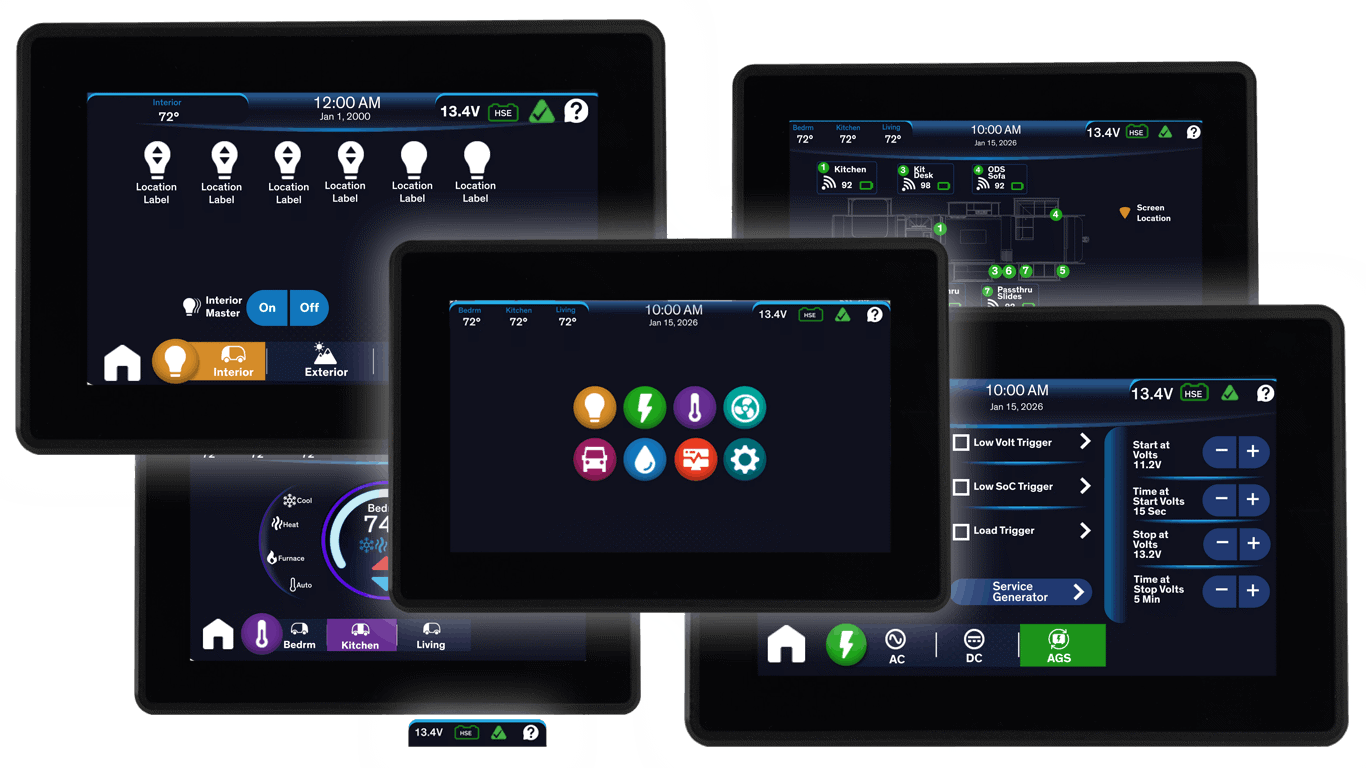
A sales rep explains how to navigate the lighting panel. Because HVAC, power, and monitoring follow similar logic, the customer already knows what to do next. They're not starting from scratch with each screen. That shared mental model is the difference between a customer who leaves confident and one who leaves polite but confused.
For dealerships running multiple Firefly-equipped units across different floorplans, this translates to something concrete: one training framework that applies across inventory. Staff onboarding gets shorter. Presentation quality gets more consistent. The product sells itself more reliably.
Fewer Callbacks - Better Service Alignment
Many early ownership support calls aren't system failures. They're retention gaps. The customer forgot which screen controls which feature, or they're not sure whether what they're seeing is normal behavior.
When the interface is consistent, customers are more likely to navigate successfully on their own. When they do call, the explanation the service team gives matches what the sales team said at delivery. That alignment across sales, service, and support reduces re-education time and keeps service bays focused on actual repairs.
From the dealership's perspective, that means fewer non-warranty calls, cleaner service workflows, and a customer experience that holds together across the ownership lifecycle.
Why this Starts at the OEM Level
Interface consistency isn't something dealers can create on their own. It has to be built into the product.
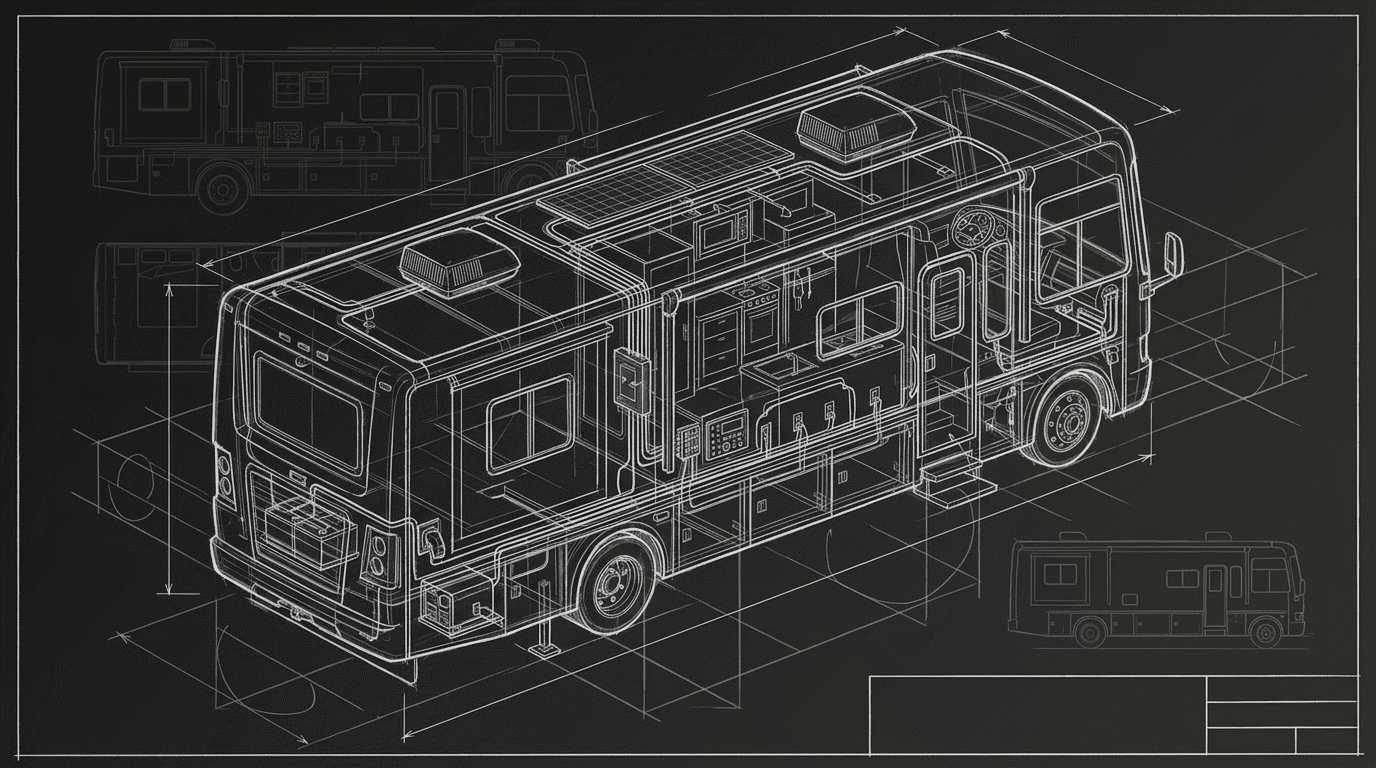
When OEMs work with Firefly to establish a standardized control experience across trims and model years, dealers inherit that consistency downstream. Showroom demos are easier. Handoffs between locations are more predictable. Staff don't have to relearn the product every time inventory turns.
For OEM product teams, that's a direct return on the integration investment: fewer dealer support escalations, better feature adoption, and a vendor relationship that reduces complexity rather than adding it.
Consistency Doesn't Limit What the Product Does - It Makes it Easier to Sell
The goal of a consistent multiplex interface isn't to simplify the technology. It's to make advanced capability approachable for the person standing in the aisle of an RV for the first time.
When walkthroughs go well, customers leave confident. They use their systems. They recommend the dealer. They don't need hand-holding six weeks later. That outcome is good for the dealer, good for the OEM, and good for the owner.
That's what Firefly builds toward: systems as capable and reliable as the people who use them, and partners who can actually explain what those systems do.